A Rolex Datejust reference 1601 came into our London Bridge workshop at The Shard with an unusual but very noticeable fault: whenever the customer wound the watch or adjusted the time, the dial moved and shook inside the case.
The customer had simply been passing our London Bridge branch and walked in without an appointment. They needed the watch back as quickly as possible, so we carried out an assessment straight away. The watch is fitted with a Rolex calibre 1570 automatic movement, and in this case the movement needed to be secured correctly inside the case.
This is one of the advantages of our London workshops: customers can walk in with a fault, have the watch assessed and, where the repair is suitable for same-day work, potentially have it completed without sending the watch away for weeks.
We completed the movement-securing repair in under one hour. We then pressure tested the watch as an additional check. The pressure test identified a minor leak from the crown area, so although the original movement/dial problem had been resolved, we advised the customer that further work was required before the watch should be exposed to water.
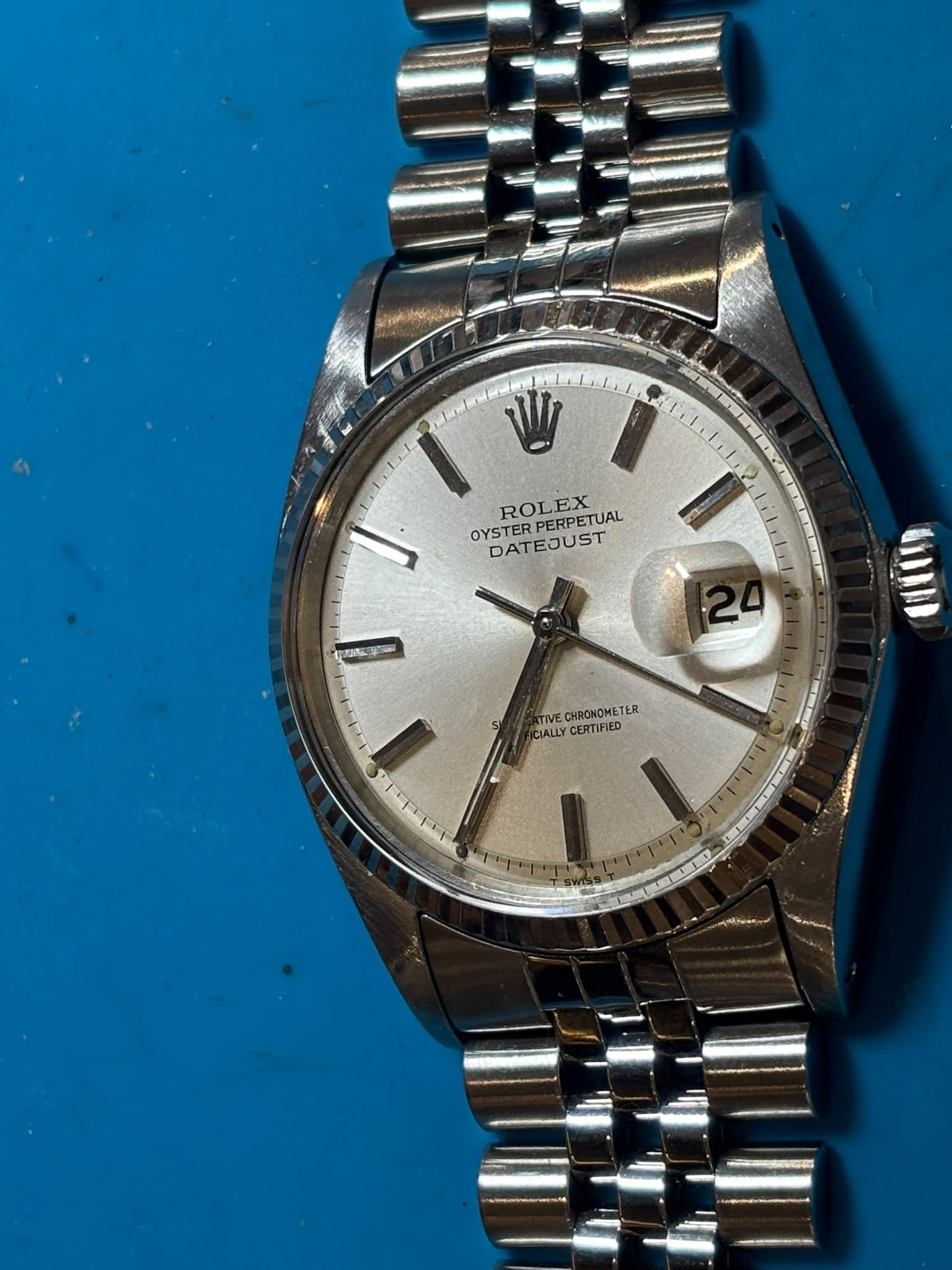
The Fault: Rolex Dial Moving When Winding or Setting the Time
A dial should remain securely positioned when a watch is wound or the hands are adjusted. If the dial appears to move, shake or rotate when using the crown, it can indicate that something inside the case is not being held securely.
Possible causes can include problems with the way the movement is secured in the case, damaged or loose dial fittings, or previous work that has left components with unwanted movement. The correct diagnosis depends on the individual watch.
On this Rolex 1601, the issue was resolved by securing the movement correctly inside the case.
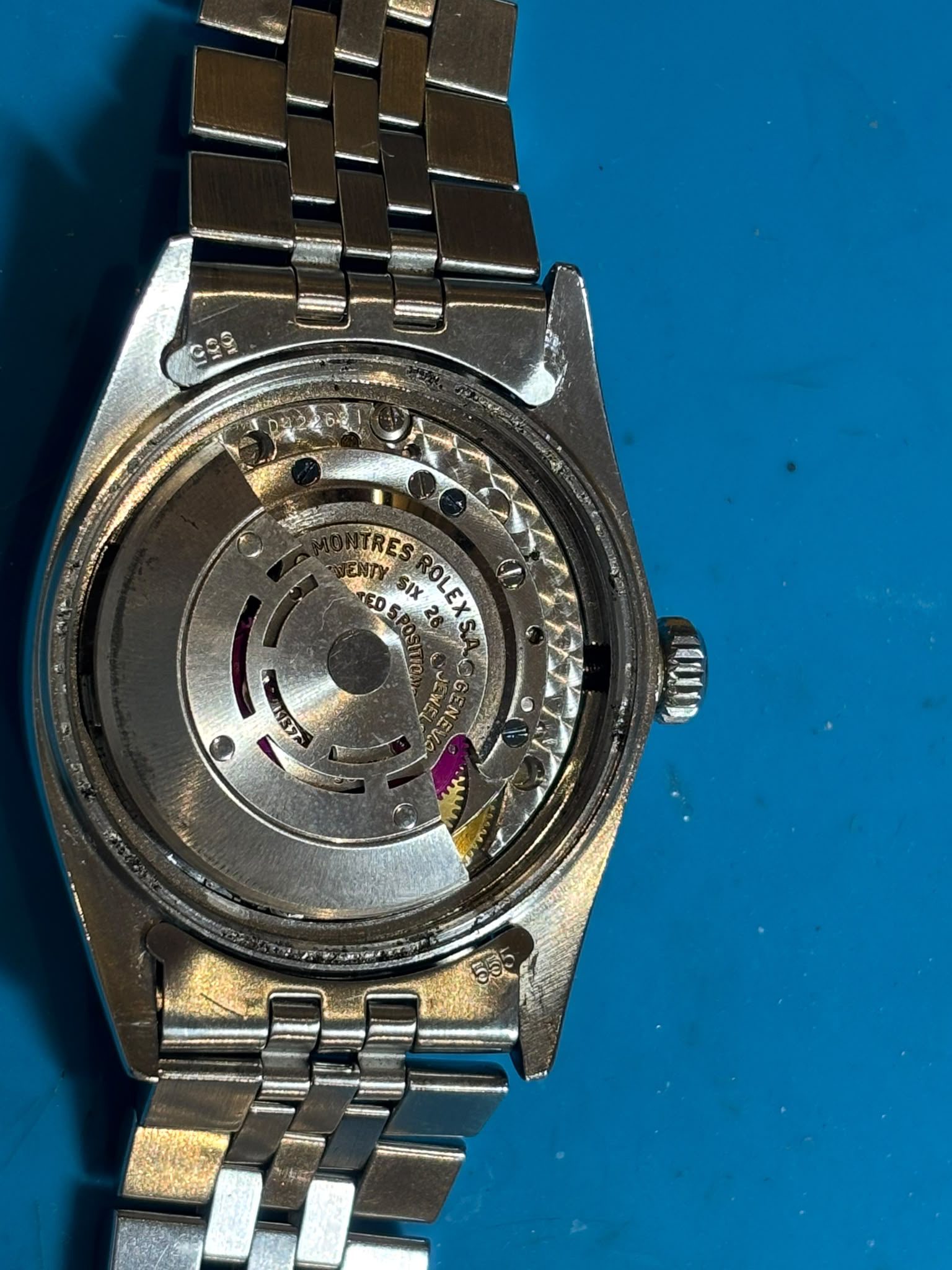
Rolex Calibre 1570 Movement Inspection
With the case back removed, we were able to inspect the calibre 1570 movement and check how it was sitting inside the case.
Because the customer specifically needed the watch back urgently, the priority was to correct the movement of the dial without carrying out unnecessary additional work that had not been approved.
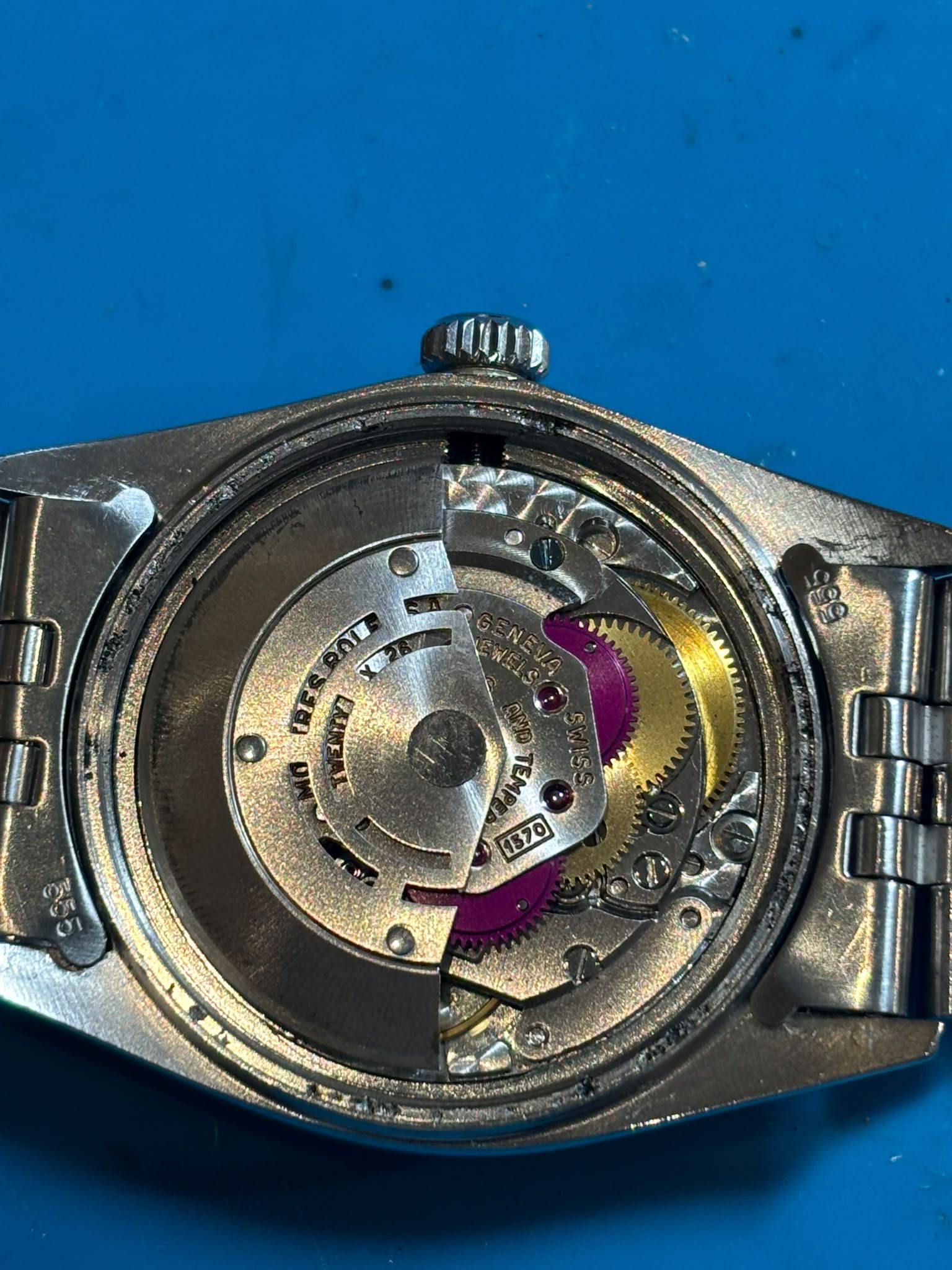
The movement was secured and the watch was reassembled. Once completed, the dial remained stable when the crown was used to wind the watch and set the time.
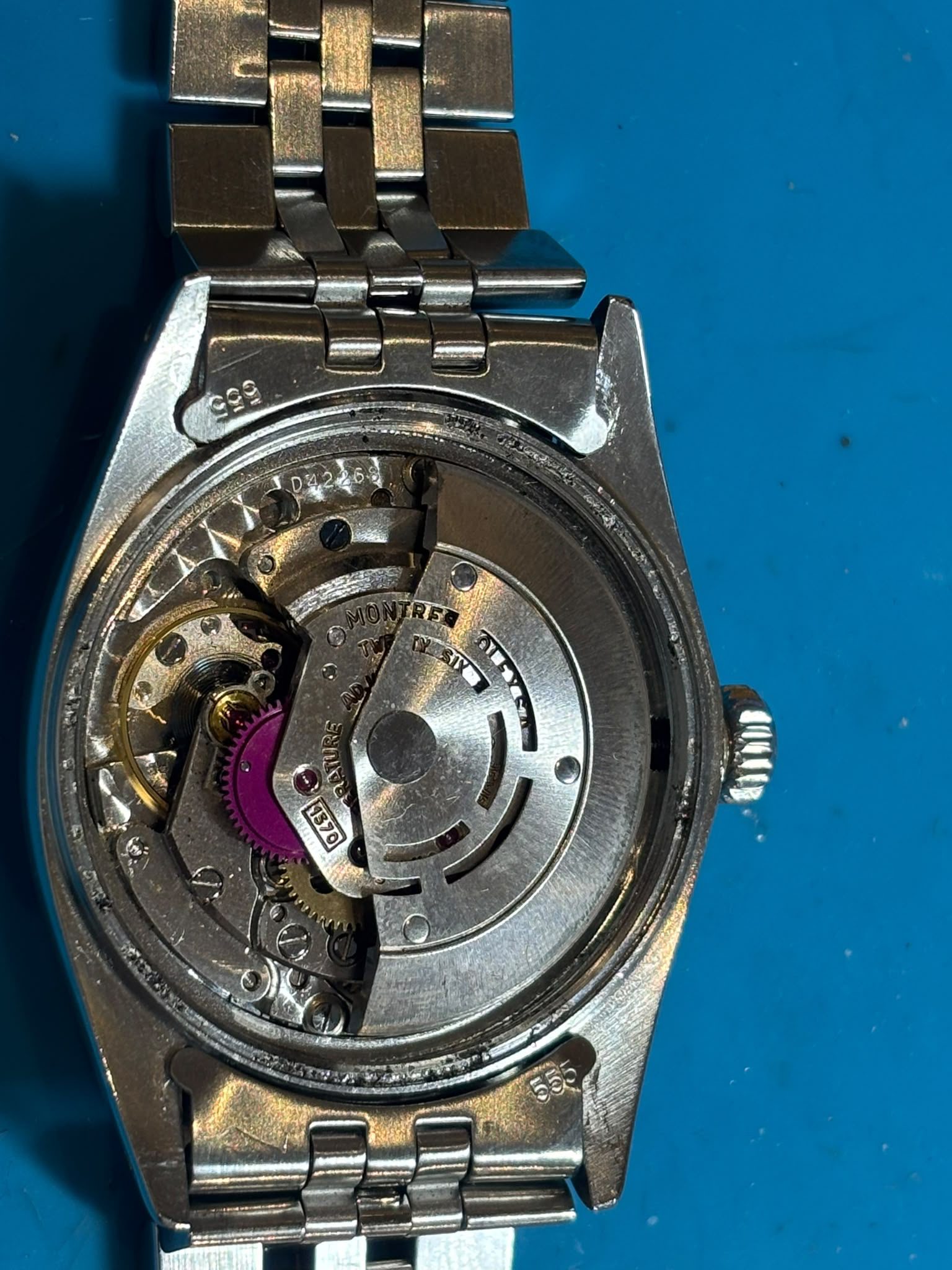
Completed Within an Hour
For this repair, the customer’s main requirement was speed. Because the movement did not need to be fully dismantled for the approved work, we were able to secure it and resolve the moving-dial complaint in under an hour.
This is a good example of why an assessment is important. A dramatic-looking symptom does not always mean the watch needs to be away for several weeks. Some faults can be corrected quickly once the exact cause has been identified.
If your Rolex dial moves when winding the watch, shakes when setting the time, or appears loose inside the case, our Rolex watch repair service can assess the cause before any work is approved.
You can also see our wider guide to Rolex repair in London and our recent real-world article on watch hands, markers, batons and loose dial components for other examples of faults that can sometimes be repaired quickly.
Pressure Testing Revealed a Crown Leak
After resolving the movement issue, we pressure tested the Rolex. This was particularly important because correcting one fault does not automatically mean an older watch is suitable for swimming or exposure to water.
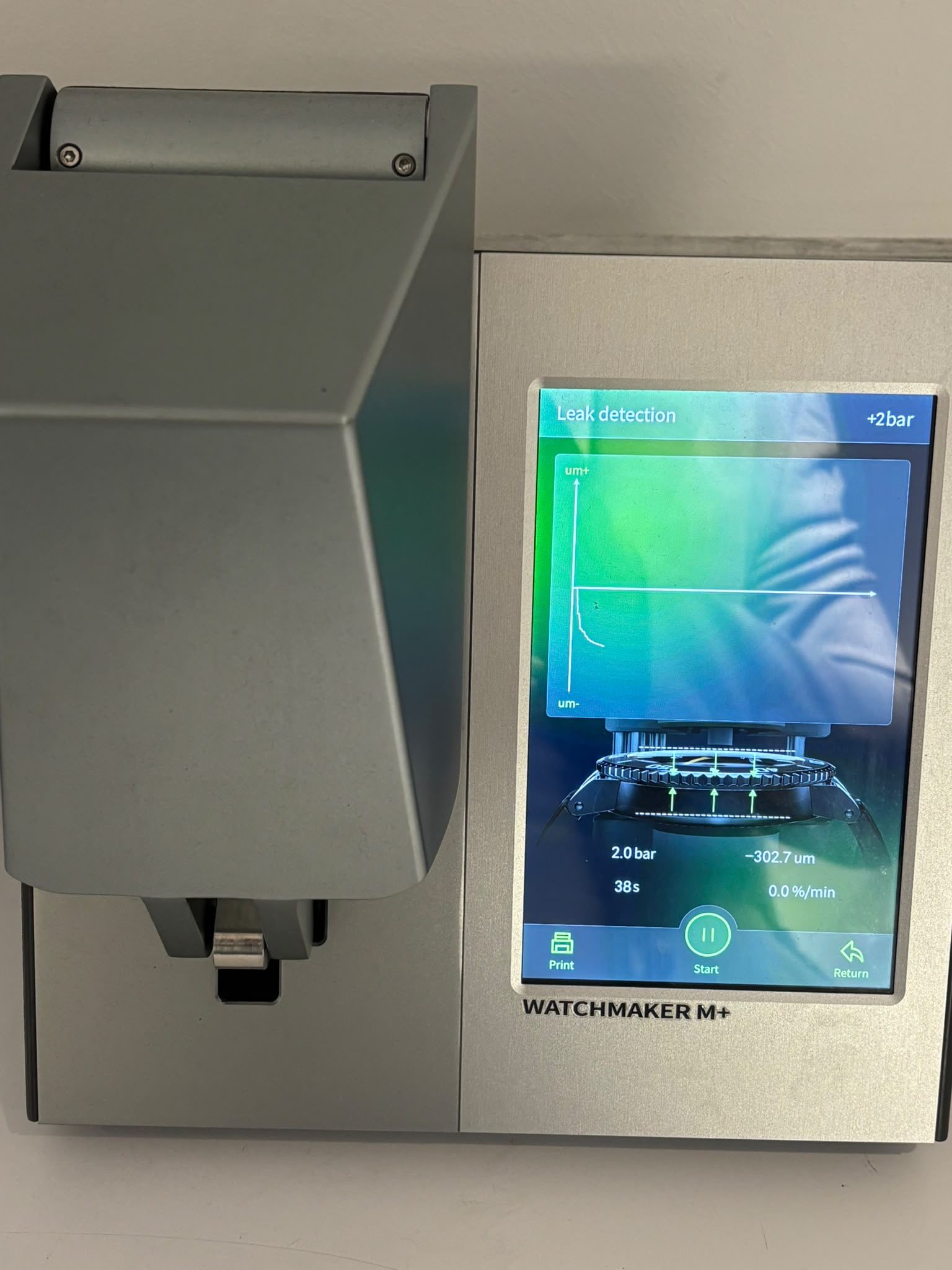
The test then identified a minor leak from the crown area.
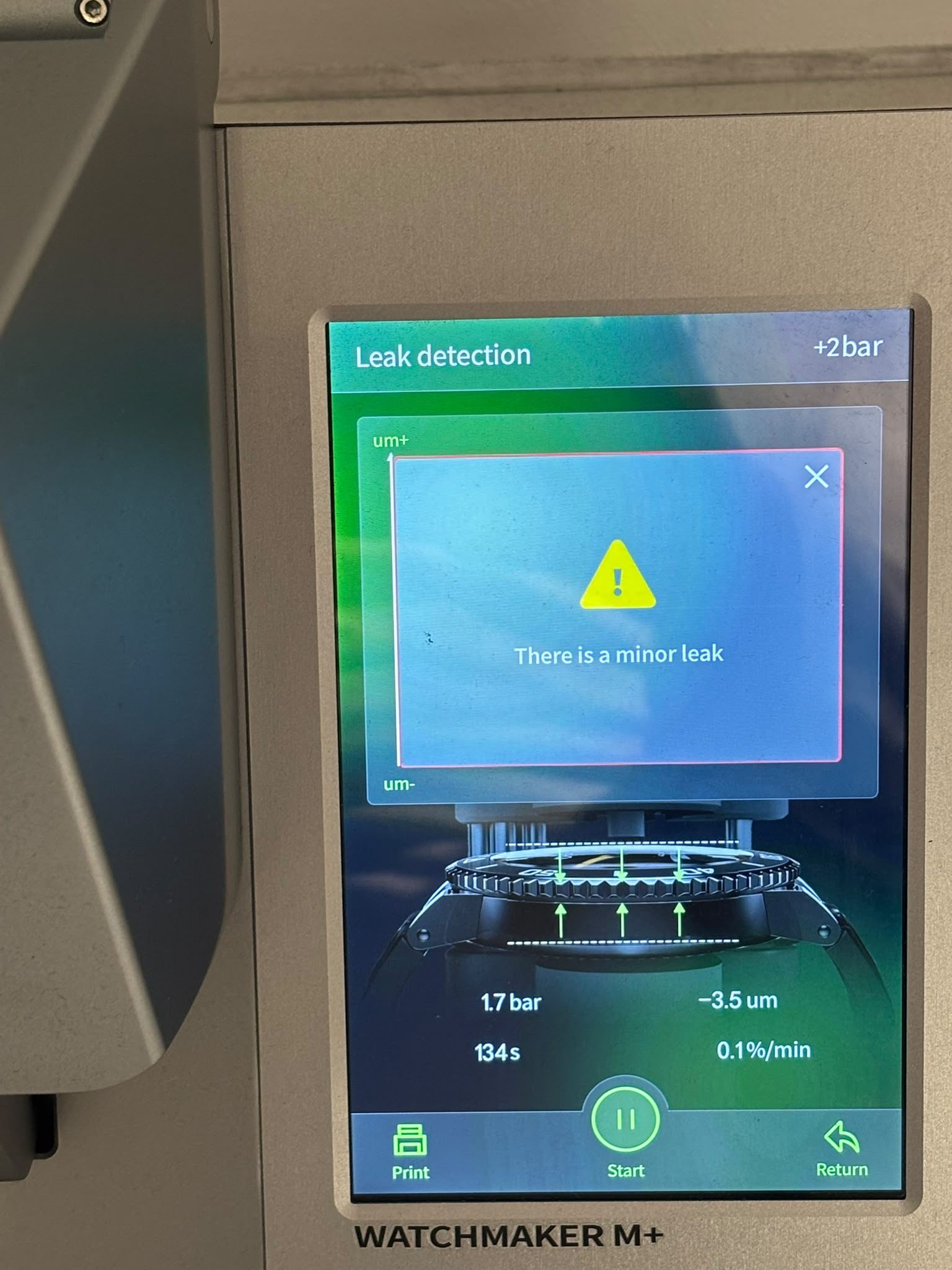
We explained the result to the customer and advised that the watch required further work before it should be treated as water resistant. The customer was specifically told not to swim with the watch in its current condition.
You can read more about this type of testing on our watch pressure testing page.
We Recommended a Full Service — The Customer Chose the Work They Wanted
During the assessment we also recommended that this Rolex undergo a full service. The customer declined the additional work at this stage because their immediate priority was to have the moving dial issue resolved and get the watch back quickly.
As an independent watch repairer, our approach is to explain what we find, recommend the work we believe the watch needs, and clearly identify any limitations if the customer decides not to proceed with everything recommended.
In this case, the customer approved the specific repair to secure the movement. We completed that repair, identified the separate crown leak during testing, advised against swimming with the watch, and returned it with the additional service recommendations clearly explained.
Why This Matters on Older Rolex Watches
A vintage or older Rolex may have more than one issue present at the same time. A customer can bring a watch in because the dial is moving, for example, but inspection and testing may reveal a completely separate problem with water resistance.
That is why we do not assume that solving the original complaint automatically means every part of the watch is in perfect condition.
Where appropriate, we can assess:
- Movement security inside the case
- Loose or moving dials
- Hands and dial alignment
- Crown and stem condition
- Case seals and gaskets
- Pressure-test performance
- Timekeeping and movement condition
- Whether a full service is recommended
Rolex 1601 Repair in London
If you own a Rolex Datejust 1601, a Rolex with calibre 1570, or another mechanical watch with a dial that moves when you wind or set the time, bring it to Ross Watch Repairs for an assessment.
We carry out watch part repairs, movement-related repairs, pressure testing and full servicing at our London workshops. Depending on the fault, some repairs can be completed the same day.
You can visit:
Ross Watch Repairs – The Shard
306 The Shard Retail Arcade
London Bridge Street
London SE1 9BZ
Ross Watch Repairs – Canary Wharf
Unit 4B, Cabot Place Shopping Centre
Canary Wharf
London E14 4QT
Customers outside London can also use our UK postal watch repair service.
Frequently Asked Questions
Why does my Rolex dial move when I wind the watch?
If the dial moves when the crown is used, something inside the case may not be secured correctly. Possible causes include movement security, dial fittings or previous repair work. The watch needs to be opened and assessed to identify the exact cause.
Can a loose Rolex movement be repaired the same day?
Sometimes. In this real Rolex 1601 repair, the movement was secured and the original complaint was resolved in under an hour. Turnaround depends on the cause and whether any damaged parts need to be replaced.
What movement is in this Rolex 1601?
This particular Rolex Datejust reference 1601 is fitted with a Rolex calibre 1570 automatic movement.
Why did the Rolex fail its pressure test?
After the movement repair, testing showed a minor leak from the crown area. We advised the customer that further work was required and that the watch should not be used for swimming in its current condition.
Do I have to approve every repair you recommend?
No. We explain the condition of the watch, the work we recommend and any risks or limitations. The customer decides which work to approve. In this case, a full service was recommended but declined, so we completed the specific movement-securing repair that had been authorised.
Can you repair vintage Rolex watches?
We can assess many older Rolex watches for movement faults, crowns, stems, hands, pressure testing, servicing and other repairs. Parts availability and the condition of the individual watch will determine what work is possible.
Free Rolex Repair Assessment
If your Rolex dial is moving, the movement feels loose, or the watch behaves differently when you wind or set the time, contact Ross Watch Repairs for a free assessment.
Contact us for a free repair estimate or visit The Shard or Canary Wharf with the watch.
Ross Watch Repairs is an independent watch repair company and is not affiliated with, authorised by or endorsed by Rolex SA.