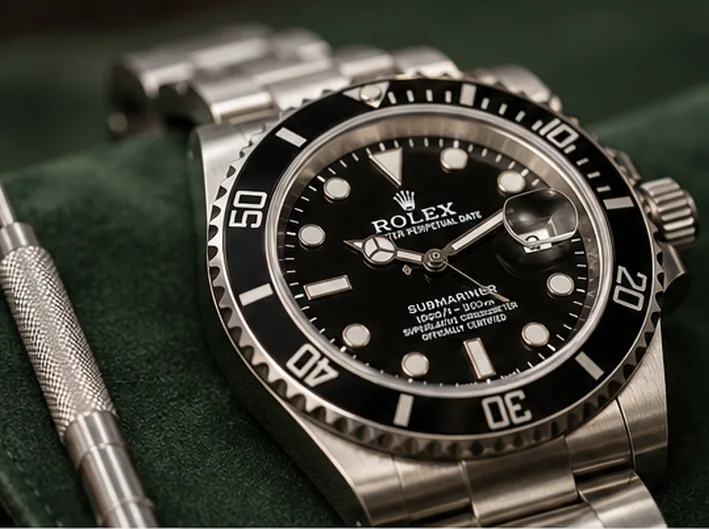
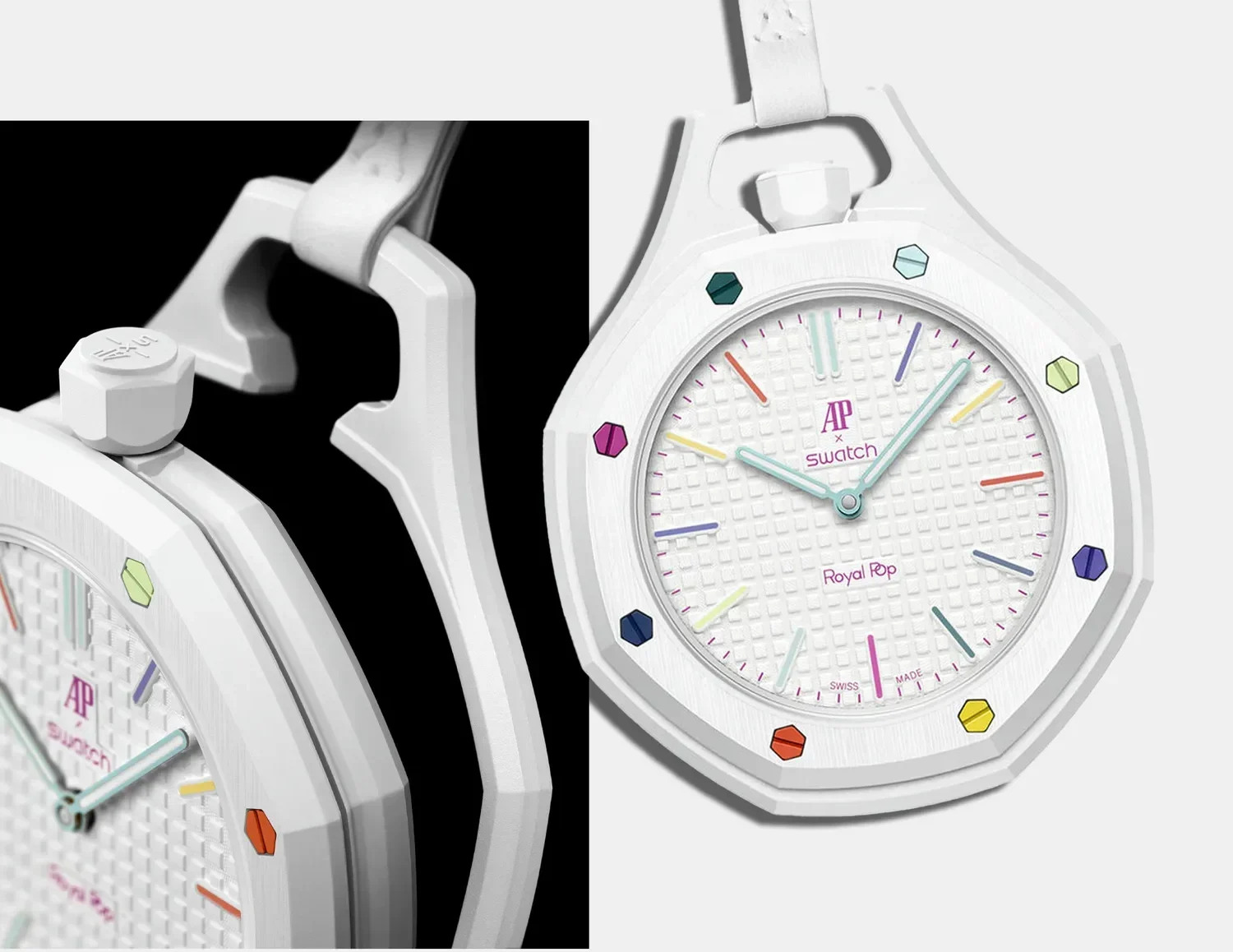
A watch hand, hour marker, baton or even the entire dial can come loose after a knock, drop or heavy vibration. It can look alarming, but in many cases it is a relatively quick repair.
At Ross Watch Repairs, we regularly see watches where a hand has fallen off, a dial marker has detached, or the dial itself has started to move inside the case. These faults can often be repaired the same day, usually within a couple of hours, depending on the condition of the watch and whether any parts are damaged.
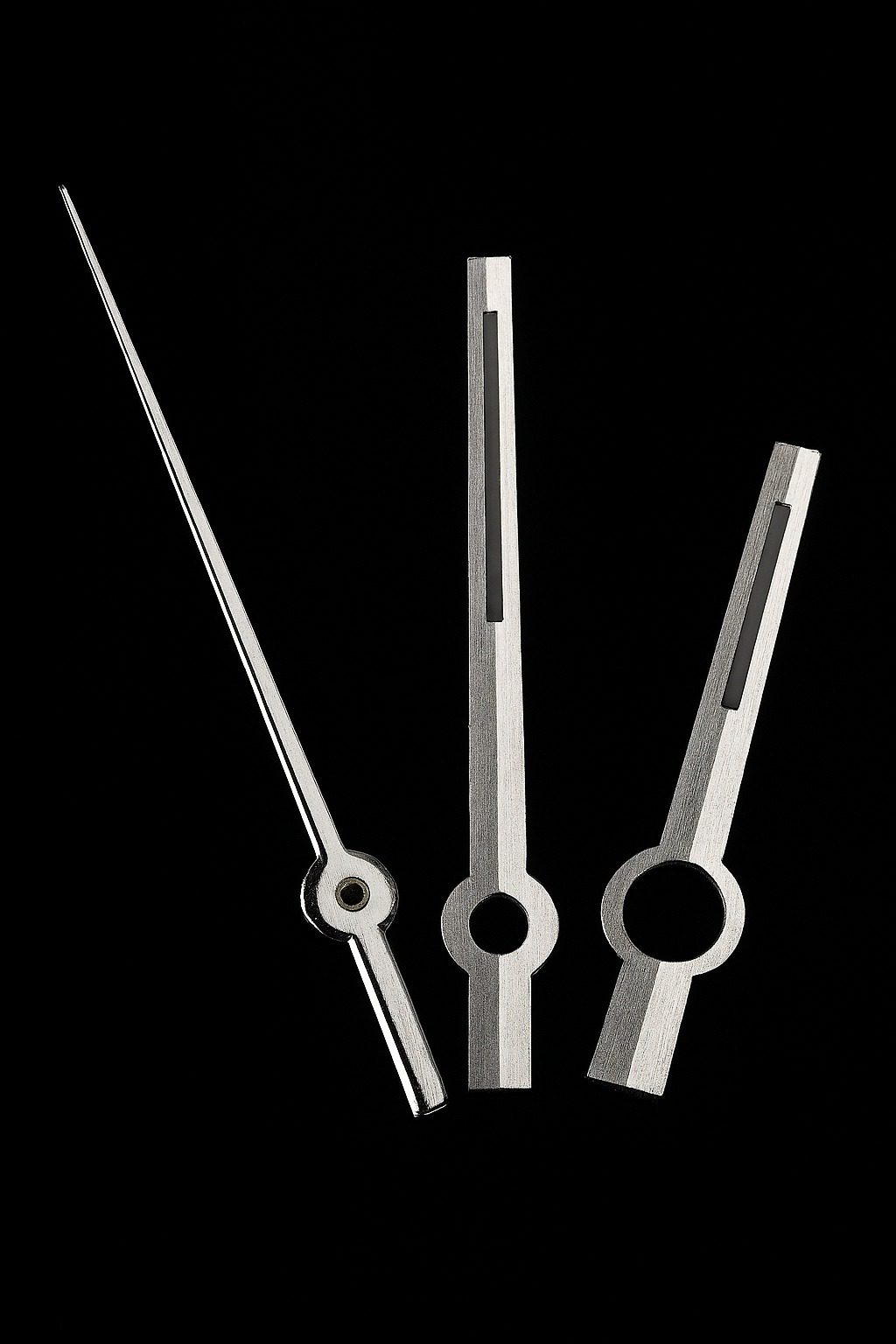
Why Do Watch Hands, Markers and Batons Fall Off?
The most common cause is impact. A watch may be dropped, knocked against a hard surface, or receive a sudden shock while being worn.
Even when the case and glass look completely fine, the force can travel through the watch and loosen one of the small components attached to the dial.
Heavy vibration can sometimes cause the same problem. We have even had dial feet fail on one of our own watches while riding a quad bike, most likely because of the constant vibration. It shows that a watch does not necessarily need to suffer a major impact for something inside to work loose.
Common faults we see include:
- Watch hand fallen off
- Hour marker or baton detached from the dial
- Numeral or index marker loose inside the watch
- Hands touching or catching each other
- Dial feet snapped, allowing the dial to rotate or move
- Dial sitting out of position after a knock
What Should You Do If a Watch Hand Falls Off?
If you notice a loose hand, marker or baton inside the watch, it is best to stop wearing it until it has been repaired.
A loose part can move around inside the watch and may scratch the dial, mark the underside of the glass or become trapped between the hands. Continuing to wear or shake the watch can turn a straightforward repair into a more expensive cosmetic problem.
Bring the watch in for an assessment and we can check whether the original component can be refitted.
Watch Hand Reattachment and Realignment
If a watch hand has fallen off, the repair is not simply a case of pushing that one hand back into place.
The hands need to be correctly aligned with each other and with the time-setting mechanism. In most cases, we remove the hands, inspect them and then refit them in the correct sequence and position.
This is especially important on watches with multiple hands, date changes or chronograph functions. If the hands are fitted incorrectly they may catch each other, hit the dial, show the wrong time relationship or interfere with other functions.
Our watch part repair service covers hand replacement, hand fitting and other component repairs where suitable.
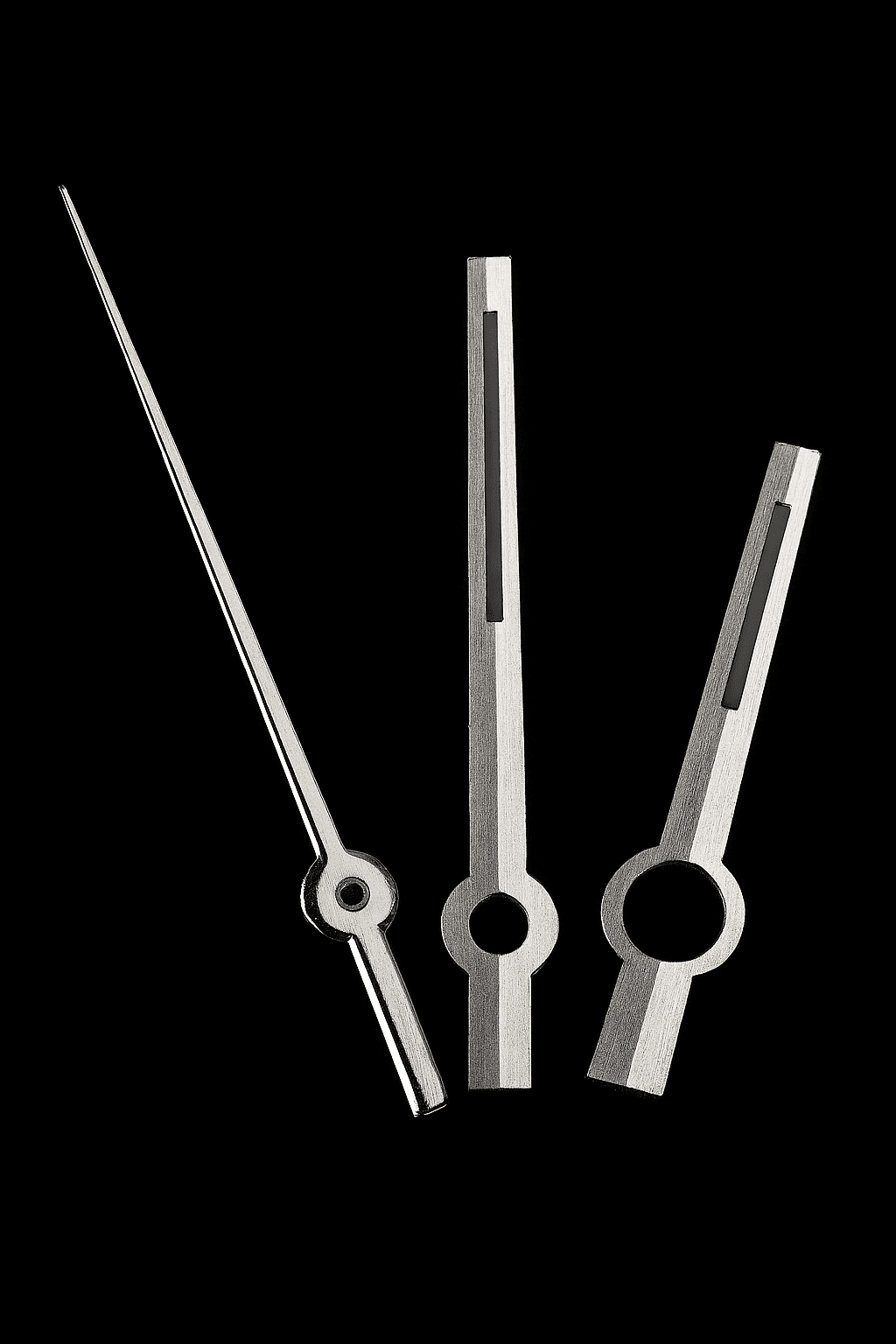
Watch Marker and Baton Repair
Hour markers, batons and applied numerals are usually fixed directly to the dial. A knock or drop can cause one of them to break free even if there is no visible damage to the outside of the watch.
Where the original marker is still present and undamaged, it can often be reattached.
This requires precision gluing. Only a very small amount of suitable adhesive should be used, and the marker needs to be positioned accurately so it sits straight and matches the other dial markers.
Too much adhesive can damage the appearance of the dial, while poor alignment is immediately noticeable. This is why baton and marker repairs are best carried out under magnification using proper watchmaking tools.
What Happens If the Dial Feet Snap?
The dial itself is normally held securely to the movement using small feet on the back of the dial. A strong knock, drop or prolonged vibration can sometimes snap these feet.
When this happens, the dial may begin to rotate or move inside the case. Customers often describe this as the whole watch face spinning or sitting at an angle.
In many cases, the dial can be secured again using special replacement feet or an appropriate specialist dial-securing method so it sits correctly against the movement.
The movement, hands and dial need to be carefully removed and realigned before the watch is reassembled.
Can a Loose Dial Damage the Watch?
Yes. A moving dial can cause the hands to catch, rub or become displaced. It can also put additional pressure on internal components.
If the dial has moved significantly, we recommend avoiding further use until it has been inspected.
The good news is that, where the dial and movement have not suffered additional damage, this type of repair can often be completed without replacing the entire dial.
How Long Does a Watch Hand or Marker Repair Take?
Many hand, marker, baton and dial-foot repairs are relatively quick jobs.
Where the original parts are present and undamaged, we can often complete the work the same day within a couple of hours.
Turnaround may be longer if:
- A hand or marker is missing
- The dial itself is damaged
- New hands need to be ordered
- The movement has also been damaged by the impact
- The glass needs to be removed or replaced
- The watch requires additional servicing
If the watch has also developed a movement fault after the impact, we can assess it for watch servicing or overhaul.
Can the Original Watch Hand or Marker Be Reused?
In many cases, yes.
If the original hand, baton or marker is still inside the watch and has not been bent or damaged, it can often be cleaned and refitted.
If the component is missing or damaged, we will check whether a suitable replacement can be sourced. For discontinued watches, this may depend on parts availability.
Watch Hand and Dial Repair in London
Ross Watch Repairs can assess loose watch hands, fallen dial markers, batons, numerals and rotating dials at both of our London branches.
You can visit our The Shard, London Bridge workshop or our Canary Wharf branch for a free assessment.
Customers outside London can also use our UK postal watch repair service.
Frequently Asked Questions About Loose Watch Hands and Markers
Why has my watch hand fallen off?
The most common causes are a knock, drop or heavy vibration. The impact can loosen the hand from its fitting even when there is no obvious external damage.
Can you reattach a watch baton or hour marker?
In many cases, yes. If the original marker is present and undamaged, it can often be accurately repositioned and secured using a precision adhesive technique.
Why is my watch dial spinning?
A rotating or moving dial can be caused by broken dial feet. The dial may need to be removed and secured back to the movement using replacement feet or another suitable specialist method.
Do all of the watch hands need to be removed?
Often, yes. Removing and refitting the hand set allows the hands to be correctly realigned and checked so they do not touch each other or catch on the dial.
Can this be repaired the same day?
In many cases, yes. Straightforward hand, baton, marker and dial-foot repairs can often be completed within a couple of hours, subject to inspection and parts availability.
Should I keep wearing the watch if a marker is loose?
We recommend avoiding further wear until it has been inspected. A loose component can move around inside the watch and may scratch the dial, glass or interfere with the hands.
Get a Free Estimate
If a watch hand, baton, marker or dial has come loose, bring the watch to Ross Watch Repairs for a free assessment.
Ross Watch Repairs – The Shard
306 The Shard Retail Arcade
London Bridge Street
London SE1 9BZ
Ross Watch Repairs – Canary Wharf
Unit 4B, Cabot Place Shopping Centre
Canary Wharf
London E14 4QT
No appointment is required for an initial assessment. You can also contact Ross Watch Repairs with photos and details of the fault.