Pressure testing

Watch Pressure Testing for Water Resistance

Your water-resistant watch only stays that way while its seals are intact. A pressure test checks whether it is still holding its water resistance. Walk in at Canary Wharf or London Bridge, or send it by post.

Free assessmentand payment on completion
Usually quicktesting, depending on the watch
Up to 500 mequipment capability, not the test used for every watch
No appointmentat Canary Wharf or London Bridge

Why it matters

Seals weaken over time

Over time, gaskets can weaken, which compromises the watch’s ability to stay water-tight. Regular pressure testing is a quick, non-invasive procedure that checks whether your watch is still maintaining its water resistance at the time of the test.

  • Helps identify a loss of water resistance
  • Does not replace your model’s instructions: heat, steam and soap can affect water resistance
  • Sensible after battery replacements, servicing or accidental knocks

It is also an important part of many servicing and overhaul jobs, particularly where the watch is designed for regular exposure to water.

Omega watch undergoing pressure testing after a premium battery reseal, shown secured in a professional testing device.

What the result means

Pass or fail, you know where you stand

If it passes

A pass confirms the watch met the test conditions at the pressure applied, on that date. It does not make the watch waterproof, and its future resistance depends on the continuing condition of the crown, glass, seals and case. Follow the watch’s marked rating and our advice.

If it fails

A failed test means the watch has lost water resistance, often through the seals or crown, but it may need further investigation. We can carry out leak testing to show where the leak is coming from. We explain the options, agree any repairs with you first, and re-test after the work.

No watch is truly “waterproof”. Watches are water resistant to a rating, which describes what the watch was designed for when new. Seals age, so condition matters as much as the rating.

Our process

Our pressure testing process

01

Inspection

Check the crown, caseback, glass and pushers.

02

Pressure test

Test to the model’s design and rating, selected for the watch’s condition.

03

Explain the result

We explain what the result means. If a watch fails, leak testing can show where the leak is coming from.

04

Agree repairs and re-test / return

We agree any repairs with you first, then re-test.

Our equipment can simulate depths up to 500 metres. That is the equipment’s capability only. The test we apply is selected for your watch’s rating and condition, and not every watch can be tested. We use both dry testing and wet testing.

Rolex Deepsea Sea-Dweller submerged in water, showing the importance of pressure testing for water resistance.

Combined with other work

Test whenever the case is opened

Opening a watch disturbs its seals. We reseal and pressure test suitable watches after opening the case. For quartz watches having a new battery fitted, pressure testing is part of our battery reseal service.

Turnaround, guarantee and price

Assessment and price

Testing is usually quick, depending on the watch. Any guarantee applies to reseal or repair work we carry out, not to the watch’s water resistance for life.

Assessing your watch is free. The pressure test itself is charged separately, and we confirm the price before we test. You pay on completion.

Questions

Frequently asked questions

How do you test my watch?

We use both dry testing and wet testing. If a watch fails, we can carry out leak testing to show where the leak is coming from.

Can all watches be pressure tested?

No. Suitability depends on the watch’s construction, age and condition. We advise before testing.

What if it fails?

A failed test usually points to the seals or the crown. We can carry out leak testing to show where the leak is coming from, explain the options, and agree any work with you before we do it.

Does a pass mean I can swim with my watch?

Not automatically. A pass confirms the watch met the test conditions at the pressure applied, on that date, not every possible depth. Follow the rating marked on the watch and the advice we give you.

Is “waterproof” real?

No. Watches are water resistant to a rating, which describes what the watch was designed for when new. Seals age, so a watch’s present condition matters.

How often should I test?

If you swim or wear the watch every day, annually is common. Testing after any work that opens the case, such as a battery change, is also sensible.

Do you test after a battery replacement?

Yes, we recommend it. Our battery reseal service includes pressure testing where appropriate.

Visit us or post it

Two London branches, or send it by post

No appointment is needed. Walk in at Canary Wharf or London Bridge (The Shard) for pressure testing and water-resistance checks. See also our Watch Repairs London guide.
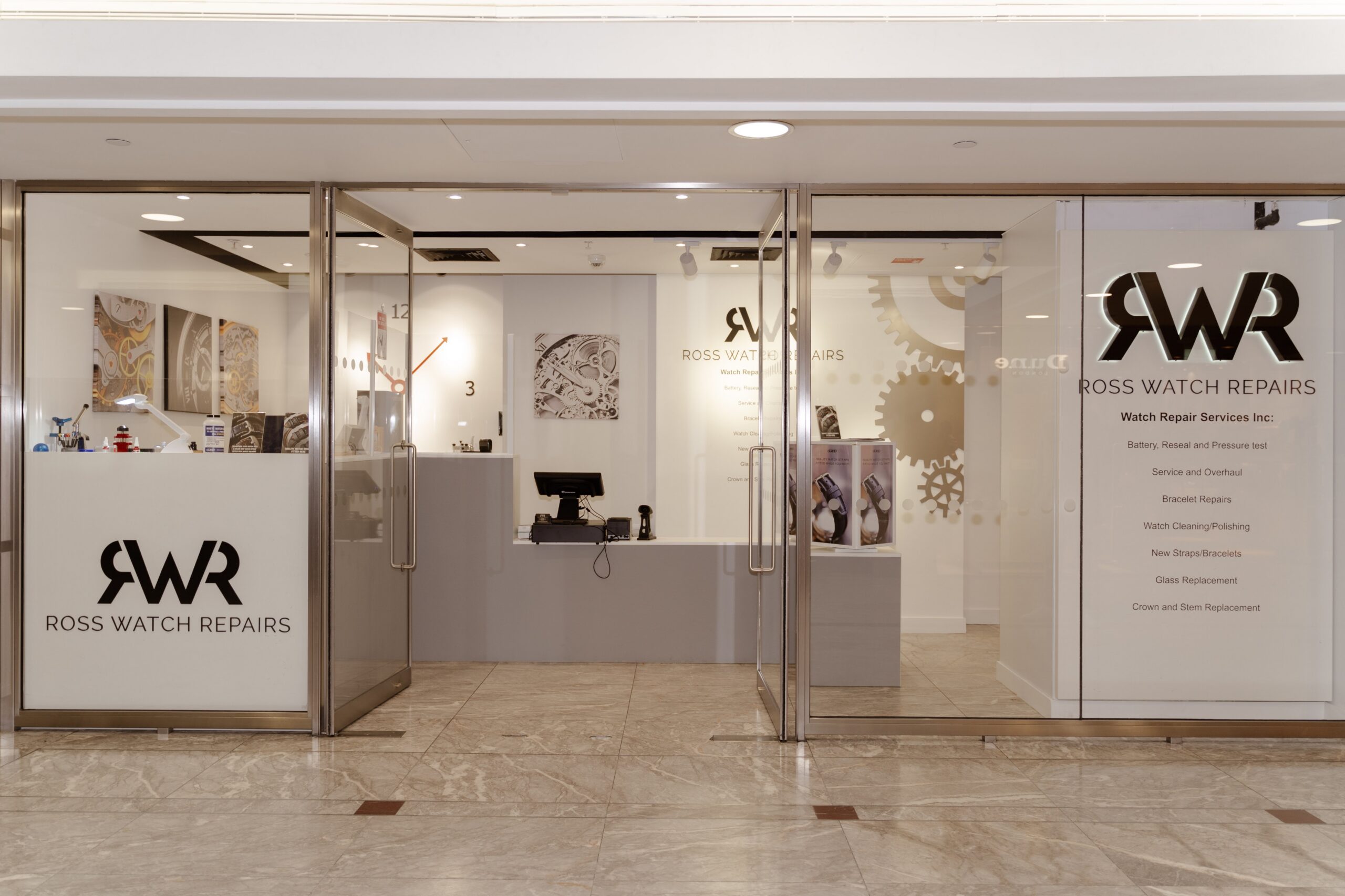
Ross Watch Repairs shop front at Cabot Place Shopping Centre, Canary Wharf

Canary Wharf

Cabot Place

Unit 4B, Cabot Place Shopping Centre, Canary Wharf, London E14 4QT

Mon–Thu 10am–8pm · Fri–Sat 10am–7pm · Sun 12pm–6pm

Get directions
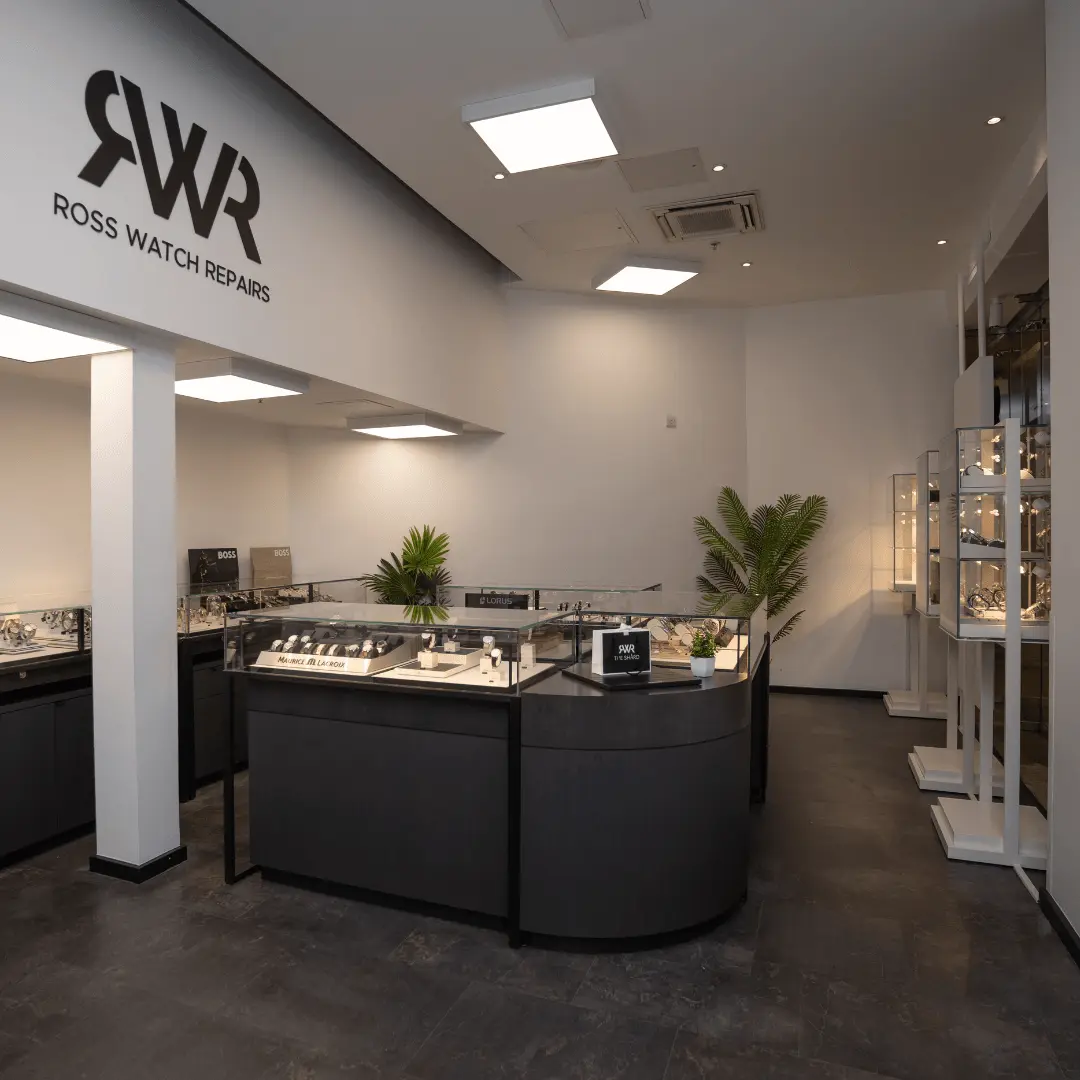
Ross Watch Repairs shop at The Shard, London Bridge

London Bridge

The Shard

306 The Shard Retail Arcade, London Bridge Street, London SE1 9BZ

Mon–Thu 7am–7pm · Fri 9am–6pm · Sat 10:30am–4:30pm · Sun closed

Get directions

Sending your watch by post

Contact us for a free estimate first, then send your watch to our Canary Wharf branch. Postal repairs usually take a few working days once we have your watch, plus Royal Mail delivery each way.

Read the full postal instructions

Walk in, no appointment

Want to know if your watch is still sealed?

Free assessment, and you pay on completion.

Get your free estimate

Fill out the form below, and RWR will be in touch shortly.

Contact Information
Watch Information